The right custom software development company is the team that can prove they understand your workflow, data, users, risks, and support needs.
Choose a bespoke software development team by checking five things first: discovery quality, relevant process experience, integration thinking, communication discipline, and long-term support. If those areas are weak, costs usually surface later.
If you are weighing up an idea, call 0800 999 1094 and talk through what you need before you commit to a scope. A short conversation can show whether custom software is the right route or whether a simpler fix will do.
What should a UK software development partner prove first?
A good partner should prove that they understand the business problem before they discuss features. Features are easy to list, but the harder work is finding where time is lost, errors happen, data is duplicated, and staff work around systems that no longer fit.
During early conversations, listen for practical questions:
- Who uses the system every day?
- Which task takes longer than it should?
- What data must stay accurate?
- Which existing tools need to connect?
- What would make the project a failure?
Many poor decisions begin here. A proposal that jumps straight to screens or technology stacks can look confident, but miss the real operational issue.
When is choosing a development agency better than buying off the shelf?
Choosing a development agency makes sense when your process gives your business an advantage, or when ready-made software forces too many compromises.
Off-the-shelf tools can work well for standard tasks. They are often faster to set up and easier to budget. The problem comes when teams start exporting spreadsheets, copying data between platforms, or paying for features they never need.
A bespoke route is stronger when you need:
- A workflow built around how your team actually works.
- Integration with existing CRM, database, stock, sales, or reporting systems.
- Cleaner approval processes across several people or locations.
- Better visibility of performance, tasks, quotes, orders, or customer activity.
- A system that can grow without being rebuilt too soon.
Small workflow details, such as quote stages, proof approvals, delivery updates, and customer feedback can decide whether a system works. Software should remove friction, not create new admin.
The right software partner should be able to explain your workflow back to you more clearly than you explained it to them.
what should a bespoke software company ask during discovery?
A strong discovery process should feel specific. It should uncover what users need, what managers need, and what the system must protect.
For example, if you need CRM functionality, the discussion should cover lead capture, follow-ups, permissions, reporting, automation, and how customer records move through the business. Our bespoke CRM development work is built around that principle: the system should match the process, not force the process to bend around the system.
The same applies to data. If your current set-up relies on shared spreadsheets or disconnected records, the project needs a clear data plan before design begins. A good agency should ask about ownership, access levels, backups, audit trails, and what needs to happen if something goes wrong.
which software outsourcing tips reduce risk before you sign?
The most useful software outsourcing tips are not about finding the cheapest quote. They reduce uncertainty before money changes hands.
Use this check before agreeing to a project:
- Ask for the process, not just the price.
- Check who will manage the project day to day.
- Confirm how changes will be priced.
- Ask what happens after the launch.
- Agree how progress will be reported.
- Make sure testing includes real users, not only developers.
You should also check how the agency handles database structure and integration. A build can look polished while hiding weak data architecture. If your system depends on secure, organised records, bespoke database systems need to be planned with scalability, access, and accuracy in mind from the start.
what should your software development partner checklist include?
A practical development partner checklist should compare agencies on evidence, not sales language.
Look for:
- Clear discovery questions.
- Examples of similar operational challenges.
- A realistic view of timescales.
- A named communication process.
- Testing, training, and support after launch.
- Integration knowledge.
- A direct explanation of what is and is not included.
- The confidence to challenge your brief when needed.
That last point matters. A useful partner will not agree with every request. They will explain trade-offs, suggest simpler routes, and flag ideas that add cost without value.
For mobile projects, this checklist should also cover device behaviour, user journeys, app store requirements, permissions, and future updates. Our custom mobile application development service follows a discovery and planning process before UX design and build, because app projects fail quickly when the user journey has not been properly mapped.
How can you judge the agency’s long-term fit?
Long-term fit becomes visible in how an agency talks about maintenance. Software is not finished at launch. Users find new needs, security expectations change, and reporting often evolves once managers see better data.
Ask direct questions:
- Who supports the system after launch?
- How are bugs prioritised?
- Can the software grow with new departments, locations, or services?
- Will documentation be provided?
- What access will your team have?
- How will future improvements be scoped?
A good agency will welcome these questions. They show that you are thinking like an owner, not just a buyer.
For wider digital needs, Webprogress solutions bring together websites, custom software, mobile apps, CRM tools, and tailored systems. That joined-up view matters when your website, database, customer communication, and workflow need to support one another.
Choose the partner that makes the decision clearer
The right software company will not make the project sound effortless. They will make it understandable. They will explain the risks, remove vague assumptions, challenge weak requirements, and show how the finished system will support daily work.
That is the standard worth looking for. Not the biggest pitch, cheapest quote, or longest technology list. The best fit turns a messy operational problem into a clear, usable system.
To talk through your requirements, call 0800 999 1094, or email info@printingprogress.co.uk.
Frequently asked questions
How do I choose the best software development company?
Choose the company that shows strong discovery, relevant experience, clear communication, realistic pricing, testing discipline, and post-launch support. Avoid agencies that quote before understanding your workflow.
Is bespoke software better than off-the-shelf software?
Bespoke software is better when your workflow is specific, complex, or central to your competitive advantage. Off-the-shelf software is better for standard tasks with simple requirements.
What should I ask before outsourcing software development?
Ask who will manage the project, how changes are handled, what testing includes, what happens after launch, and how the new software will integrate with existing systems.
How long does custom software development take?
Timelines depend on complexity, integrations, user roles, and testing needs. A simple internal tool may take weeks, while a larger system can take several months.
What makes a good development partner?
A good development partner explains trade-offs clearly, challenges unclear requirements, plans for support, and builds around real business processes rather than generic features.

 Eco friendly, sustainably sourced recycled FCS certified print
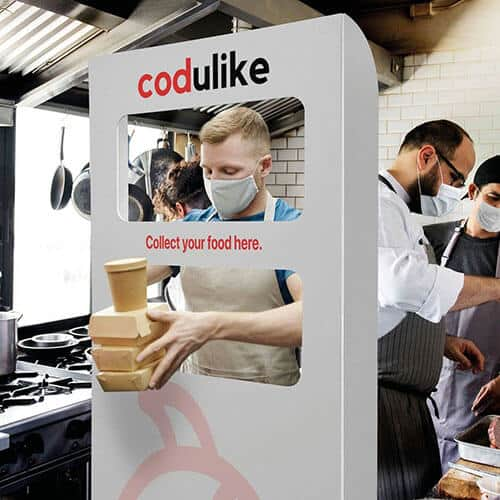 Takeaway Screens
 Postal Boxes